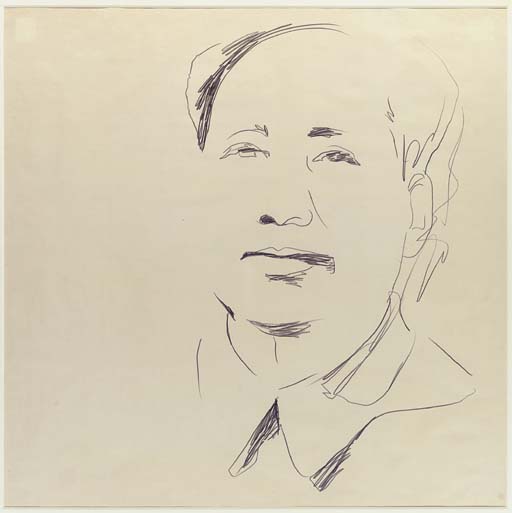
 Being in the early stages of this blog, I'm concerned with establishing entry series on the different specific topics that will live here. Some days ago there was an entry on The Maoist Revolution in Nepal. I mentioned there that I have been living in China and had a previous blog specific to the Nepal Maoists. Strangely enough, however, I have not really followed very closely contemporary activism in China itself - something I aim to change since I plan to stay awhile. I have of course been learning what I am capable of about Maoism and the early developments of Party history. Actually, I started from an initial and continuing interest in anarchism. The writings of Arif Dirlik
 about the significance of anarchism in the beginnings of the Chinese revolution were of great interest to me. As you can see from the link, he has written a good deal on China (much I have yet to read, ironically because of an interest in Maoism outside China!)
The thing is, after I went to Nepal briefly in 2006, I became very busy with work for a couple of years, and what study I did continue, focused on Marxist-Leninist writings, Louis Althusser in particular (as a major figure in Marxist history you can find everything Althusser wrote at one of my primary resource links on the sidebar, Marxist Internet Archive). Again, I did not find much time to follow closely the actual current developments in China. Then, in the last year, I found particular resonance, with what I was feeling, in the work of Alain Badiou
and Savoj Zizek(both influenced by Althusser and the psychoanalyst Jacques Lacan). Germane to the present entry: Badiou and Zizek emphasize certain kernels of truth worthy of rediscovery and allegiance in the ideas of Mao - notably regarding the Cultural Revolution. I am sure there will be much reference to this in future blog entries.Right now, however, I want to tell you about a personally satisfying experience of synchronicity. Living in China, one soon understands there is a significant net-war going on to control the information available on activist activity in China - proxy servers are a must. Since being on this New York visit, and starting this blog, I have begun looking for more information resources. The best I have found is China Study Group , and a sister site offering both English and Chinese versions of content on localized activism at China Left Review. I wonder how easy it will be to find these when back in Beijing. Anyway, you can imagine how pleased I was to find that a major contributor to these sites was the aforementioned Arif Dirlik
. Furthermore, one of the latest articles The Cultural Revolution After the "Cultural Turn" reflects an analysis quite along the lines I found in Badiou and Zizek. Its a good starting point for my emphasis in the blog on the topic "China" - consider the following excerpts: "There were good reasons why some of the cultural aspirations of the Cultural Revolution took the form they did; at least reasons that lend themselves to historical and social explanation. But any effort to assess the Cultural Revolution as an attempt to achieve socialism must also assess these forms critically against their own socialist claims. And from that perspective, they leave much to be desired."
"Why then even bother? The answer is simple: the underlying premise of the Cultural Revolution was quite sound, and may be more important now than then as not just culture but cultural criticism itself has been rendered into a commodity-socially and politically, as well as economically. That premise was, as I understand it, that cultural transformation is crucial to the consolidation of social and political change, but only so far as it is grounded in the goals driving the political economy; which, in the case of socialism, would be the pursuit of universal economic and political justice, and freedom from oppression and exploitation."
Dirlik then develops this view of the underlying premises of the Cultural Revolution thus:
"The radical cultural project that the Cultural Revolution placed on the global agenda four decades ago is as urgent in our day as it was then. It also affords a perspective from which to view the present critically. This also pertains to the economic, social and political vision that animated the cultural project. Indeed, it is possible to suggest that the developmental vision that animated the cultural project sought to forestall the kind of development that has since become a reality in the PRC and the world at large, that is responsible for the marginalization of large numbers of people as well as bringing the world into the brink of ecological and social disaster."
The alternative view of the developmental vision of the Cultural Revolution suggested by Dirlik, what may be of lasting significance (we can say, what should be recovered), he thinks is founded on three premises:
[1] "The first was "self-reliance”(zili gengsheng) its emphasis on the local and the place-based... both in terms of initiatives, and in terms of attentiveness to local needs... the combination of agriculture and industry at the local level, to answer directly to the needs of the population. ... The idea itself had its origins in China in Kropotkinite Anarchist thinking of the early twentieth century..."
[2] "The second premise was the priority given to social relations (including culture and ideology) over the forces of production conceived technologically, which was clearly enunciated in Mao's critiques of Soviet economics from the late 1950s... "
[3] "... the social relations Mao had in mind transcended simple class relations, but extended to questions of organization as well. Underlying Mao's stress on social relations was a broader assumption that economic development required attention to social and political totalities... a distinctive dialectical approach to development applied to China's concrete conditions during the socialist transition.”
I leave it to you to read the detailed analysis Dirlik undertakes of Mao's text, especially The Ten Great Relations (1956 essay)in substantiating the significance and interpretation of the three premises above. Skipping to Dirlik's subsequent observations and conclusions:
"We are all familiar with the success of reforms that have made the PRC into a global factory, with the promise of becoming the economic center of the globe. The reforms also have created a new middle-class that may eventually encompass roughly twenty percent of the population, a middle class that now can enjoy the benefits of development. We are also familiar with the downside of these developments. Self-reliance may have paved the way for the enormous success of local enterprises in this development, but economically, politically and culturally speaking, the PRC has little claim to autonomous development, having become entirely dependent on a global market of which it is at once a motor force and a product. Class inequality matches that of the US(and the globe as a whole), as do gender and ethnic inequality. The seriousness of urban-rural inequality is evident in the daily uprisings that threaten the sustainability of rural existence. Spatial inequalities divide the coast from the interior. Everyone of the contradictions that Mao enumerated in the 1956 essay has reached a sharpness that call into question the continued viability of the PRC as a national entity. And, of course, added to all those earlier contradictions is possibly a looming ecological disaster that is not just a Chinese problem..."
"It is also in the interest of this class to undermine if not to silence the revolutionary legacy that played a major part in the creation of contemporary China... This is not to say that the premises I focused on above were translated into satisfactory forms in the developmental activities of Maoist China... the hype over globalization presently conceals the problems created by globalization itself, and ignores the extent to which the welfare of many in both the developed and the developing world is dependent on state guarantees, achieved not under neoliberalism but through a century of struggles of which the Chinese Revolution, including the Cultural Revolution, was an integral part. It is important, as we evaluate critically the revolutionary past, and the ways in which it may have undermined its own socialist goals, to remember nevertheless that there is nothing innocent about contemporary attacks against the Chinese Revolution either in the PRC or abroad..."
"... We can see here another contradiction that did not find its way into Mao's discussion: a contradiction between revolutionary social and political goals and goals of national wealth and power. The latter has indeed served as the legitimation for development under Mao's successors. As in the rest of the world, national power serves as the justification for the impoverishment and marginalization of millions. The current Party and government leadership in the PRC may have given up on just and equitable development for the population, but it does not hesitate to fuel the flames of nationalism when it serves its interests, especially in distracting attention from urgent social issues."
"...It is possible to read the Maoist strategy of development as a critique of development that fetishized consumption and cultural alienation, and they have been read as such by critics of an unbridled developmentalism that promises to alleviate poverty for some while in actuality creating destitution for a majority... It is this situation that renders indispensable the recollection of issues raised in the writings cited above."
"... it may be possible once again to recall with considerable benefit issues of self-reliance and social justice. This is in many cases quite indispensable if the regime has to retain its credibility and legitimacy as a socialist regime. The contradictions that the regime faces presently are not the same as the contradictions of an earlier day. In some ways they may be even more serious in their implications. They include the most fundamental questions of whether or not China as it has formed or is imagined to be as a consequence of a century of nationalist fervor is sustainable, whether or not continued centralized rule is in the best interests of the people, whether or not the PRC is to identify with the world of Global Capitalism or the GlobalSouth, whether or not the PRC can stand with the interests of the dispossessed and marginalized globally or put an end to colonialism at home, whether or not the regime can genuinely work with place-based needs and social movements, including the self-activity and organization of working people in China and abroad, and what, in the realm of culture, is its take on the spread of a consumer culture that may render socialism itself into a commodity of sorts, until little remains of it but its slogans which may even be placed for inspiration in the boardrooms of transnational corporations?..."
"...The space of contradictions has changed, and presents new problems of political, social and cultural articulation. But the contradictions are still there, and the radical legacies of the past may be as relevant as ever in guiding us to their recognition and, hopefully, resolution."
Blog Guide: A discussion of blog features and primary topic content may be found at the initial entry. The first few entries give a good idea of how best to use the blog, especially for the tagging and social bookmarking at my external Delicious site, and for instructions regarding the Stefandav TV widget.
news books articles people topics culture politics philosophy activism badiou zizek
Subscribe to Stefandav: Atom 1.0 RSS 2.0
Read more!


 Posts
Posts


